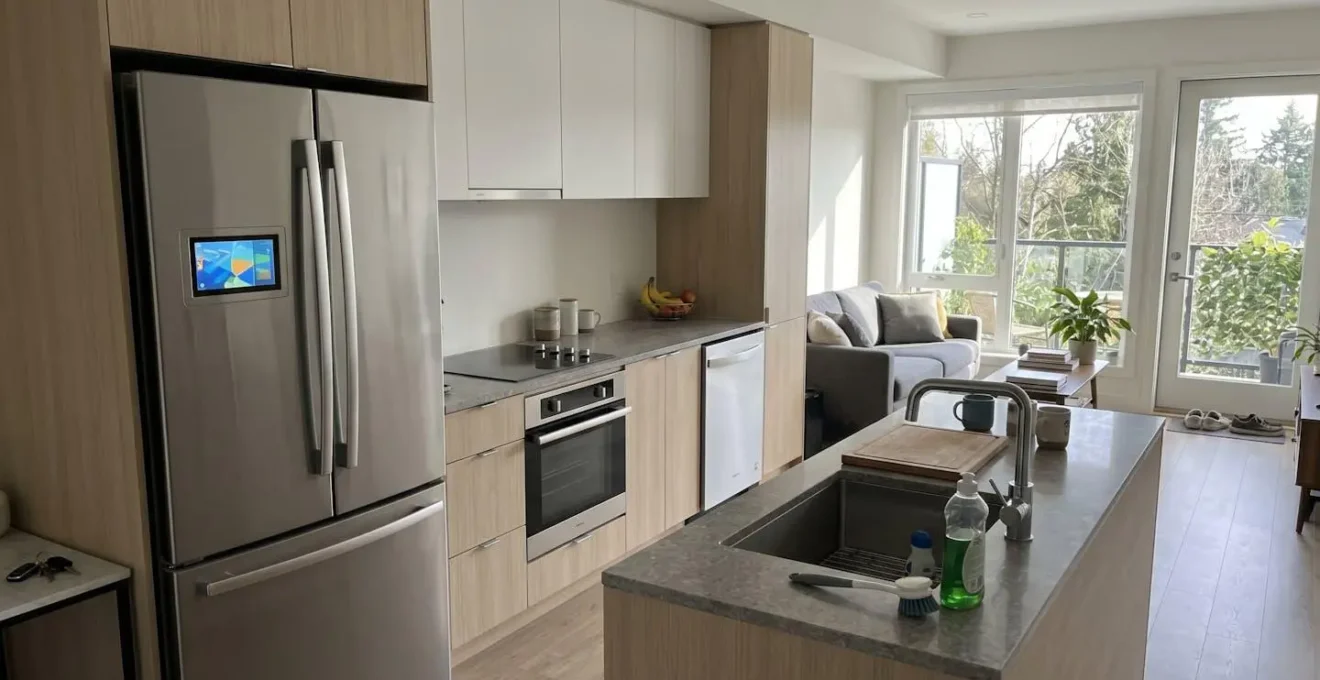
As energy costs continue to rise and environmental concerns grow, homeowners are increasingly turning to energy-efficient appliances to reduce their carbon footprint and save money on utility bills. These innovative devices not only consume less power but also offer advanced features that enhance overall household efficiency. From smart refrigerators to high-performance HVAC systems, the latest generation of appliances is revolutionizing energy consumption management in modern households.
In this article
- Understanding energy consumption in modern households
- Energy Star certification: your reliable benchmark for efficiency
- Smart refrigerators: advanced cooling technologies and energy management
- High-efficiency washing machines: water and energy conservation innovations
- HVAC systems: next-generation heating and cooling solutions
- LED and smart lighting: illumination efficiency breakthroughs
- Energy-efficient dishwashers: water and power consumption reduction techniques
- Building your energy-efficient appliance upgrade roadmap
Understanding energy consumption in modern households
Household energy consumption has become a pressing concern for American homeowners, particularly as utility rates have climbed steadily over the past decade. The average U.S. household now spends over $2,000 annually on energy bills, with a significant portion of this expenditure attributable to appliances that operate continuously or frequently throughout the day.
The reality is that not all appliances contribute equally to your energy bill. Understanding which systems consume the most power is the first step toward making informed decisions about where to invest in efficiency upgrades. Heating and cooling systems typically dominate household energy consumption, followed by water heating and major appliances such as refrigerators, washers, and dryers.
40-50%
Heating and cooling (HVAC systems) share of typical household energy consumption
Water heating accounts for approximately 15-20% of household energy use, while refrigeration and other major appliances represent another 10-15%. Lighting, despite being a frequent target for efficiency improvements, typically accounts for only 5-10% of total consumption—though this percentage has decreased significantly as LED technology has replaced incandescent bulbs in most homes.
Take the case of a typical suburban household with appliances over 10 years old. The family’s aging central air conditioning system cycles on and off constantly during summer months, their refrigerator runs a traditional fixed-speed compressor around the clock, and their top-loading washing machine uses 40 gallons of water per load. The cumulative effect of these inefficiencies can add hundreds of dollars to annual energy costs compared to what the same household would pay with modern, Energy Star-certified replacements.

Energy Star certification: your reliable benchmark for efficiency
Energy Star certification serves as the most reliable benchmark for identifying truly energy-efficient appliances in the U.S. market. Established jointly by the U.S. Environmental Protection Agency and the Department of Energy, this voluntary labeling program sets rigorous standards that go well beyond federal minimum efficiency requirements. When you see the distinctive blue Energy Star label on an appliance, you’re looking at a product that has been independently certified to meet strict energy performance criteria.
The program’s impact extends far beyond individual product performance. According to EPA’s official program impact data, nearly 90% of American households now recognize the Energy Star label, making it one of the most trusted consumer guides for energy efficiency. This widespread recognition reflects decades of consistent standards and verifiable savings. In practical terms, choosing Energy Star products across all major appliance categories can save a typical household approximately $450 on energy bills each year.
What sets Energy Star apart from generic efficiency claims is the specificity and accountability of its criteria. For 2025, the EPA has introduced its « Most Efficient » designation, which recognizes products that deliver exceptional performance even among Energy Star-certified models. These top performers in each category represent the cutting edge of current technology. The standards are updated regularly—typically every few years—to ensure that as manufacturing technology advances, the Energy Star threshold continues to represent meaningful efficiency gains rather than becoming a baseline that all products can easily meet.
The 2025 EPA Most Efficient criteria confirm that certified appliances across major categories deliver substantial savings: clothes dryers offer 40-60% greater efficiency over federal minimums, washers provide 46% energy savings plus significant water conservation, and refrigerators achieve 10-30% improvements. Before committing to specific appliance purchases, many homeowners find it valuable to conduct a comprehensive home energy audit to identify which existing appliances are the biggest energy drains and should be prioritized for replacement.
Smart refrigerators: advanced cooling technologies and energy management
Refrigerators represent one of the most significant opportunities for household energy reduction, simply because they operate continuously, 24 hours a day, 365 days a year. A refrigerator manufactured before 2010 can consume 600-800 kWh annually, while modern Energy Star-certified models with advanced technologies often use less than 400 kWh per year. The latest innovations in refrigeration technology go well beyond simple insulation improvements, incorporating sophisticated systems that actively manage cooling demand.
The compressor is the heart of any refrigeration system, and traditional compressors operate in a simple on-off cycle—running at full capacity when cooling is needed, then shutting off completely when the target temperature is reached. This constant cycling is inherently inefficient. Variable speed compressors represent a fundamental redesign of this approach, allowing the compressor to adjust its output continuously based on real-time cooling demand.
Leading manufacturers including LG and Samsung have pioneered these inverter-driven compressor systems in their premium refrigerator lines. Instead of cycling on and off dozens of times per day, a variable speed compressor might run continuously at 40% capacity during low-demand periods (such as overnight when the door remains closed), then ramp up to 80% capacity during peak usage times. The 2025 EPA Most Efficient criteria confirm that standard refrigerators with these advanced systems can deliver 10-30% greater efficiency compared to federal minimum standards, translating to annual savings of 40-180 kWh.
This adaptive operation delivers benefits beyond energy savings alone. Because the compressor isn’t constantly ramping up to full power and then shutting down, temperature fluctuations inside the refrigerator are minimized, which helps preserve food quality and reduce spoilage. Traditional refrigerators also run defrost cycles at fixed intervals—typically every 8-12 hours—regardless of whether frost has actually accumulated. Smart refrigerators equipped with adaptive defrost technology take a more intelligent approach, using sensors to detect actual frost levels and initiating defrost cycles only when necessary, reducing unnecessary defrost operations by 30-40%.
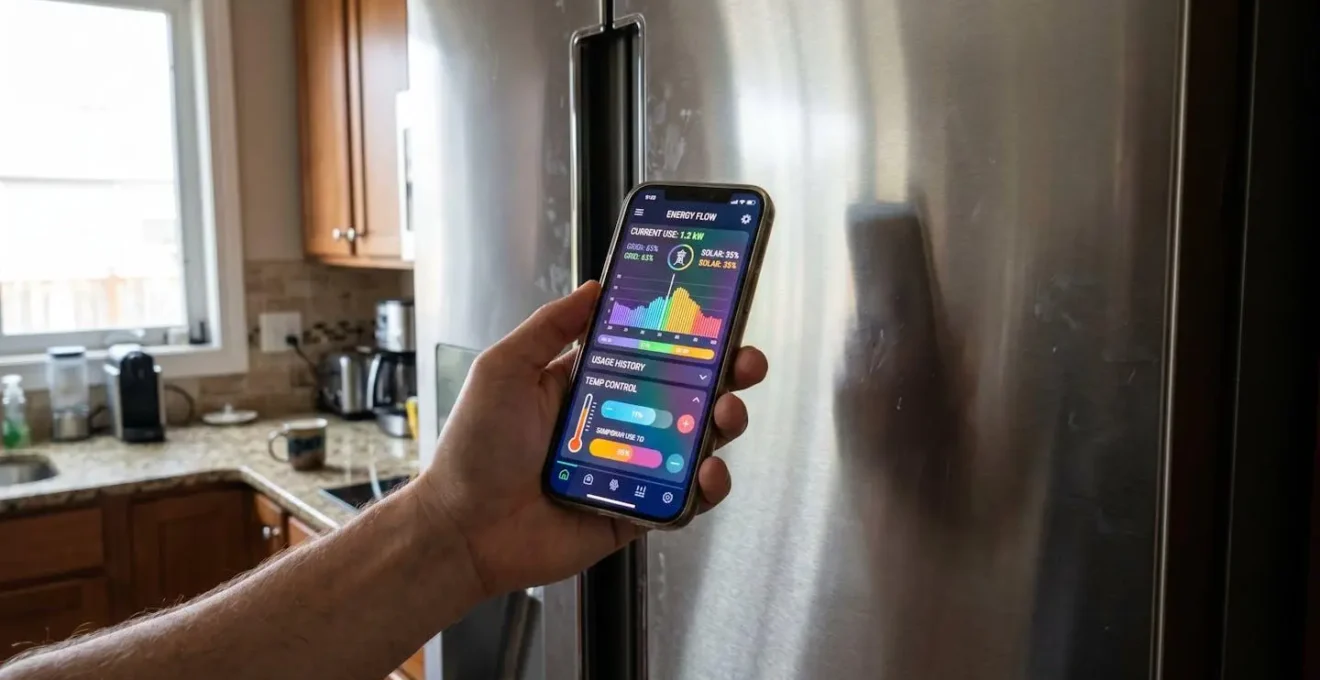
The Internet of Things has transformed refrigerators from passive cooling boxes into connected appliances that provide unprecedented visibility and control. Modern smart refrigerators equipped with WiFi connectivity allow you to monitor internal temperatures, receive alerts about door ajar conditions, and adjust settings remotely through smartphone apps. The energy efficiency benefit comes from the ability to implement more sophisticated control strategies. You can enable vacation mode when traveling, reducing cooling intensity to save energy while maintaining safe food storage temperatures. Some models learn your usage patterns over time and automatically adjust cooling cycles to minimize energy consumption during predictable low-use periods. Certain high-end models even integrate with home energy management systems, allowing the refrigerator to reduce its power draw during peak rate periods if you’re on a time-of-use electricity plan.
While interior lighting might seem like a trivial concern compared to compressor operation, the shift from incandescent to LED lighting in refrigerators has delivered measurable benefits. LEDs consume up to 90% less energy than the incandescent bulbs used in older refrigerators and generate significantly less heat—which is particularly important inside a refrigerated space, where every watt of heat generated by lighting creates additional cooling load. Many energy-efficient refrigerators now incorporate motion-activated LED lighting that illuminates only when the door is opened, and some models use proximity sensors to light specific sections based on where you’re reaching.
High-efficiency washing machines: water and energy conservation innovations
Laundry appliances—washers and dryers combined—can account for a substantial portion of household energy and water consumption. Modern high-efficiency washing machines have made remarkable progress in reducing both, with some models using less than half the water and energy of machines manufactured just a decade ago.
The fundamental design difference between front-loading and top-loading washing machines creates significant efficiency implications. Front-loading machines use a horizontal drum that tumbles clothes through a relatively small amount of water at the bottom of the drum, relying on gravity and mechanical action to achieve cleaning. Top-loading machines, particularly traditional agitator models, typically fill the drum with water and use an agitator to move clothes through the water. The following comparison illustrates the efficiency differences across washing machine types:
| Criteria | Front-loading | Top-loading (HE) | Top-loading (traditional) |
|---|---|---|---|
| Water consumption per load | ~15 gallons | ~20 gallons | 30-40 gallons |
| Energy consumption level | Lowest | Moderate | Highest |
| Typical spin speed (RPM) | 1,200-1,600 | 800-1,200 | 600-800 |
| Energy Star savings vs. federal minimum | Up to 46% | ~25% | Not certified |
Energy Star-certified front-loading washers larger than 2.5 cubic feet deliver exceptional performance, offering more than 370 kWh per year in annual energy savings—representing a 46% improvement over federal minimum standards—plus approximately 1,500 gallons per year in water savings. These figures come from rigorous EPA testing protocols and represent real-world performance you can expect when using normal wash cycles.
Clothes dryers have historically been among the most energy-intensive appliances in the home, with conventional electric dryers consuming 600-900 kWh annually in typical households. Heat pump dryers represent a breakthrough technology that fundamentally changes the energy equation. Rather than generating heat through electrical resistance (essentially a giant toaster element), heat pump dryers use a closed-loop refrigeration cycle to extract moisture from clothes. The system uses a heat exchanger to cool the humid air coming from the drum, condensing the moisture, then reheats that same air and recirculates it. Manufacturers including Whirlpool and Miele have introduced heat pump models that achieve Energy Star Most Efficient recognition, delivering 245-300 kWh per year in savings compared to conventional dryers—representing 40-60% greater efficiency than federal minimum standards.
The tradeoff is that heat pump dryers typically have longer cycle times, often taking 90-120 minutes for a load that a conventional dryer would complete in 45-60 minutes. However, the gentler drying process is actually better for fabric longevity, and the dramatic energy savings make the extended cycle time acceptable for most users. High-efficiency washing machines feature advanced spin cycles that can reach speeds of 1,400-1,600 RPM, extracting significantly more water from clothes than the 600-800 RPM spin speeds typical of older top-loading machines. By removing more moisture during the spin cycle, these washers reduce the workload placed on the dryer, cutting dryer energy consumption by 20-30% per load.
Modern washing machines employ sophisticated sensors to detect the size and type of each load, automatically adjusting water levels, wash duration, and agitation intensity for optimal efficiency. This intelligent resource allocation ensures you’re not wasting water or energy on small loads or delicate fabrics that require gentler treatment. Some advanced models incorporate artificial intelligence algorithms that learn your laundry habits over time, suggesting the most energy-efficient cycles based on your typical loads and preferences.
HVAC systems: next-generation heating and cooling solutions
Heating, ventilation, and air conditioning systems represent the single largest category of energy consumption in most American homes, accounting for 40-50% of typical household energy use. This makes HVAC systems the highest-priority target for efficiency improvements. Even modest efficiency gains in this category translate into substantial dollar savings and meaningful reductions in environmental impact.
Traditional air conditioning systems operate on a simple on-off cycle: when indoor temperature rises above the thermostat setpoint, the compressor runs at full capacity until the target temperature is reached, then shuts off completely. This constant cycling between maximum output and complete shutdown is inherently inefficient and creates uncomfortable temperature swings. Inverter-driven compressors employ variable-speed technology that allows the air conditioner to modulate its output continuously, matching cooling capacity to the exact thermal load at any given moment. Several manufacturers now offer energy-efficient cooling solutions utilizing these advanced inverter technologies, with leading brands including Mitsubishi and Daikin pioneering split-system air conditioners that can reduce energy consumption by 30-40% compared to fixed-speed systems.
The practical benefit becomes clear during moderate weather conditions. On a mild summer day when your home needs only light cooling, a traditional AC system must still run at full capacity every time it cycles on. An inverter-driven system can run continuously at 30-40% capacity, consuming far less power while maintaining more stable indoor temperatures. The compressor simply speeds up or slows down as needed, rather than repeatedly starting and stopping—which is the most energy-intensive aspect of compressor operation.
Geothermal heat pumps (also called ground-source heat pumps) leverage the constant temperature of the earth—typically 50-60°F just a few feet below the surface—to provide highly efficient heating and cooling. By exchanging heat with the ground rather than with outdoor air, these systems achieve efficiency levels that conventional air-source heat pumps cannot match. The installation requires drilling boreholes or burying horizontal ground loops, which creates upfront costs substantially higher than conventional HVAC systems—typically $15,000-$30,000 for a complete residential installation. However, the energy savings are exceptional. Energy Star Most Efficient geothermal heat pumps deliver 1,000-1,600 kWh per year in savings compared to federal minimum efficiency standards, representing 15-40% greater efficiency. In practical terms, geothermal systems can reduce heating and cooling energy consumption by 50-70% compared to conventional furnace and air conditioner combinations.
The payback period varies significantly based on local utility rates, system size, and installation costs, but typically ranges from 8-15 years. Given that geothermal systems can last 20-25 years (with the ground loop often warranted for 50 years), the long-term economics are compelling for homeowners planning to remain in their homes.
Smart thermostats represent one of the most accessible and cost-effective HVAC efficiency improvements available to homeowners. Devices like the Nest Learning Thermostat and Ecobee models use artificial intelligence to learn your preferences and habits, automatically creating heating and cooling schedules that optimize comfort and energy efficiency. These systems go well beyond simple programmable thermostats. They use occupancy sensors to detect when you’re home or away, integrate with smartphone location data to begin warming or cooling your home as you approach, and consider local weather forecasts to make proactive adjustments. Some models can even identify inefficiencies in your HVAC system operation and alert you to potential maintenance issues before they escalate.
Independent studies have demonstrated that smart thermostats can reduce heating and cooling costs by 10-15% when used effectively. The savings vary based on your previous thermostat use patterns—households that rarely adjusted their old programmable thermostats see the greatest benefit, while those who were already diligent about manual adjustments may see more modest savings. For homeowners seeking to maximize HVAC performance beyond just thermostat upgrades, comprehensive home HVAC optimization addresses system sizing, ductwork efficiency, and maintenance practices that collectively can deliver even greater energy reductions.
Traditional HVAC systems treat the entire home as a single zone, heating or cooling all spaces equally regardless of actual occupancy or varying thermal loads in different areas. Zoned HVAC systems use motorized dampers in the ductwork and separate thermostats for each zone, allowing you to direct conditioned air only where it’s needed. Consider a common scenario: during weekday afternoons, your home office on the second floor receives intense sun exposure and becomes uncomfortably warm, while ground-floor living spaces remain cool. A zoned system can direct cooling capacity specifically to the overheated zone without overcooling the rest of the house. Similarly, you can reduce or eliminate heating and cooling to bedrooms during daytime hours when those spaces are unoccupied. This targeted approach to climate control typically delivers energy savings of 20-30% compared to single-zone systems, with the greatest benefits realized in larger homes with multiple floors or wings that have different usage patterns and thermal characteristics.
LED and smart lighting: illumination efficiency breakthroughs
While lighting now accounts for a smaller percentage of household energy consumption than it did a decade ago—typically 5-10% of total usage—the efficiency revolution in this category has been dramatic. The widespread adoption of LED technology represents one of the most successful energy transitions in residential applications.
LED bulbs consume up to 90% less energy than the incandescent bulbs they replace and last 15-25 times longer. A typical 60-watt incandescent bulb can be replaced with an 8-10 watt LED that produces equivalent light output. Over the 15,000-25,000 hour lifespan of a quality LED bulb, the energy savings compared to incandescent lighting amount to hundreds of kilowatt-hours per bulb—savings that multiply across the dozens of light fixtures in a typical home.
Smart LED lighting systems extend these efficiency benefits through precise control over when and where lights are used. Motion sensors ensure lights are active only when spaces are occupied. Daylight harvesting systems use light sensors to dim or turn off artificial lighting in rooms receiving adequate natural light. Smartphone control and integration with home automation systems allow you to turn off forgotten lights remotely and create lighting schedules that align with your actual occupancy patterns.
Some advanced smart lighting systems can even learn your habits over time, automatically adjusting lighting patterns to minimize energy consumption without requiring manual programming or intervention. The cumulative effect of these optimizations—already efficient LED technology combined with intelligent controls—can reduce lighting energy consumption by an additional 20-30% beyond what LED bulbs alone achieve.
Energy-efficient dishwashers: water and power consumption reduction techniques
Modern dishwashers have evolved into remarkably efficient appliances that, contrary to common perception, typically use less water and energy than washing dishes by hand. Energy Star-certified dishwashers use less than 4 gallons of water per cycle, compared to the 15-20 gallons consumed when washing the equivalent load by hand under running water.
High-end dishwasher models from manufacturers including Bosch and KitchenAid incorporate soil sensors that detect how dirty your dishes actually are and adjust the wash cycle accordingly. These optical sensors measure water turbidity during the initial rinse—cloudier water indicates heavier soil levels requiring more intensive washing. This adaptive approach ensures the dishwasher uses only the necessary amount of water, energy, and time for each load. Lightly soiled dishes from a family breakfast might receive a shortened cycle with less water heating, while heavily soiled pots and pans trigger extended wash cycles with higher water temperatures. The result is a reduction in water and energy usage of 20-40% compared to models that run the same fixed cycle regardless of actual soil levels.
Traditional dishwashers use electric heating elements to dry dishes after the wash cycle, consuming significant energy during this final phase. Heat exchange drying systems represent a more sophisticated approach, capturing the thermal energy already present in the hot rinse water and using it to facilitate the drying process. These systems typically route the final rinse water past a stainless steel heat exchanger, which then uses that captured heat to warm incoming air for the drying cycle. Some implementations use condensation drying, where hot dishes naturally cause moisture to condense on cooler interior surfaces, which then drain away. These approaches eliminate or dramatically reduce the need for electric heating elements during drying, cutting drying phase energy consumption by 40-60%.
Advanced spray arm designs in modern dishwashers achieve superior cleaning performance while using substantially less water. Rather than simply increasing water volume, these systems focus on optimizing spray pattern, pressure, and coverage. Multiple spray arms—typically three or four levels including a dedicated silverware spray—ensure water reaches all dish surfaces from multiple angles. High-pressure nozzles create powerful jets that dislodge food particles more effectively than the gentler spray patterns of older models. The combination of these design improvements allows modern dishwashers to reduce water consumption by 25-35% compared to models from a decade ago, while actually improving cleaning performance.
Some premium dishwasher models now include automatic detergent dosing systems that dispense the precise amount of detergent needed for each load based on soil sensors and water hardness levels. This eliminates the common problem of detergent overuse, which not only wastes detergent but can trigger unnecessary additional rinse cycles as the dishwasher works to remove excess suds. These systems typically use liquid detergent stored in a reservoir that lasts for 20-30 wash cycles before requiring refilling. Additionally, many energy-efficient dishwashers are specifically designed to work effectively with eco-friendly, low-phosphate detergents, maintaining cleaning performance while reducing environmental impact.
Building your energy-efficient appliance upgrade roadmap
Understanding which appliances offer the greatest efficiency improvements is only the first step. The practical challenge most homeowners face is determining which appliances to replace first, given budget constraints and the reality that few households can afford to replace all major appliances simultaneously. A strategic, prioritized approach delivers the greatest energy savings per dollar invested.
The decision framework should consider three primary factors: the age and current efficiency of your existing appliances, your household’s specific usage patterns, and your available budget. An HVAC system that’s 15 years old and runs continuously during summer months represents a far more urgent replacement priority than a 7-year-old dishwasher that runs three times per week.
A June 2025 ACEEE analysis of appliance efficiency standards found that recently finalized standards will save a typical U.S. household more than $100 on average each year over the next two decades. When combined with the approximately $450 in annual savings available from choosing Energy Star products across all major categories, the cumulative financial benefit of strategic appliance upgrades becomes substantial.
Prioritizing your appliance replacements based on age and impact
- If your HVAC system is 10+ years old:
Prioritize HVAC replacement first. This category represents 40-50% of household energy use, and systems over a decade old are likely operating well below current efficiency standards. An inverter-driven air conditioner or heat pump can reduce cooling costs by 30-40% compared to your existing unit. Consider geothermal if you plan to stay in your home for 10+ years and have adequate property for ground loop installation.
- If your refrigerator is 8+ years old:
Replace your refrigerator as a second priority after HVAC. As the only appliance that operates continuously, even modest efficiency improvements deliver year-round savings. Modern variable speed compressor models use 10-30% less energy than federal minimums and 40-50% less than refrigerators manufactured before 2010.
- If you have a traditional top-loading washer and conventional electric dryer:
Consider replacing laundry appliances third, particularly if you do multiple loads weekly. Front-loading Energy Star washers save 46% energy and 1,500 gallons of water annually. Heat pump dryers deliver 40-60% savings compared to conventional electric dryers. The combined water and energy savings make this a high-impact upgrade for households with heavy laundry demands.
- If working with a limited initial budget:
Start with a smart thermostat ($150-$250) and complete LED lighting conversion ($100-$300). These lower-cost improvements deliver 10-15% HVAC savings and 80-90% lighting energy reduction respectively, providing quick return on investment while you save for major appliance replacements. Many utility companies offer rebates that further reduce upfront costs.
- If your appliances are less than 5 years old:
Focus on behavioral optimization and smart controls rather than equipment replacement. Add smart power strips to eliminate phantom loads, optimize your existing thermostat programming, ensure your HVAC system receives regular professional maintenance, and consider a home energy audit to identify air sealing and insulation improvements that enhance your existing efficient appliances.
It’s worth noting that utility company rebate programs can significantly improve the economics of appliance upgrades. Many electric and gas utilities offer rebates of $50-$500 for Energy Star appliances, with the largest incentives typically available for HVAC equipment and heat pump water heaters. Some states and municipalities offer additional incentives. Checking available rebates before making purchase decisions can reduce upfront costs by 10-25%.
Your questions about energy-efficient appliances answered
How long does it take for energy-efficient appliances to pay for themselves through energy savings?
Payback periods vary significantly by appliance category and your local energy rates. Smart thermostats typically pay for themselves in 1-2 years through HVAC savings. LED lighting upgrades recover their cost in under a year. Refrigerators and washing machines generally see payback in 3-5 years. HVAC system replacements typically require 5-8 years to recoup the initial investment, while geothermal heat pumps may take 10-15 years but then continue delivering savings for decades. The calculation depends on three factors: the efficiency improvement over your existing appliance, your actual usage patterns, and your electricity rates per kilowatt-hour.
Are Energy Star appliances really worth the extra upfront cost compared to standard models?
Yes, in the vast majority of cases. The price premium for Energy Star certification typically ranges from $50-$200 for most appliances, while the annual energy savings range from $30-$150 depending on the category. Over a 10-15 year appliance lifespan, the cumulative savings substantially exceed the modest upfront premium. Additionally, Energy Star appliances often incorporate other quality improvements—quieter operation, better warranties, more advanced features—that provide value beyond just energy savings. The average household saves approximately $450 annually across all appliances when choosing Energy Star products.
Can I install energy-efficient appliances in an older home without electrical upgrades?
Most energy-efficient appliances can be installed in older homes without electrical system modifications. In fact, because they consume less power, they’re often easier to accommodate than older, less efficient models. However, certain high-capacity appliances—particularly heat pump water heaters and some electric vehicle chargers—may require dedicated circuits or panel upgrades if your existing electrical service is near capacity. HVAC system replacements occasionally require updated disconnect switches and circuit protection to meet current electrical codes. It’s advisable to have an electrician assess your electrical panel capacity if you’re planning multiple major appliance upgrades simultaneously or if your home still has an older 100-amp electrical service.
Do smart appliances require special internet setup or ongoing subscription fees?
Smart appliances typically require only a standard home WiFi network—the same internet connection you use for smartphones and computers. Most manufacturers do not charge subscription fees for basic smart features like remote monitoring, scheduling, and alerts. Setup usually involves downloading a free manufacturer app and connecting the appliance to your WiFi network. Some advanced features—such as predictive maintenance diagnostics or integration with premium home automation platforms—may require optional subscriptions, but core functionality remains free. It’s important to note that the energy efficiency benefits of most appliances (variable speed compressors, heat pump technology, etc.) function independently of smart connectivity—the smart features are an additional convenience, not a requirement for efficiency.
What happens to Energy Star certification standards over time—will today’s efficient appliances become obsolete?
Energy Star standards are revised every few years to reflect technological advancement and ensure the certification continues to identify top-performing products. However, appliances that earn certification retain their efficiency benefits even after standards are updated. An Energy Star refrigerator purchased in 2025 will continue operating at its certified efficiency level for its entire lifespan, typically 12-15 years. While newer models introduced years later may achieve even better performance, your appliance doesn’t become less efficient simply because the standard evolved. The practical implication is that purchasing current Energy Star certified products remains a sound investment—you’re getting genuinely efficient technology that will deliver savings for years to come, even if future products eventually surpass it.
The transition to energy-efficient appliances represents both an environmental responsibility and a financially sound long-term investment. Rather than viewing efficiency upgrades as burdensome expenses, consider them strategic improvements that reduce your ongoing operational costs year after year while increasing your home’s value and comfort. As manufacturing technology continues to advance and efficiency standards evolve, the gap between older conventional appliances and modern high-efficiency models will only widen further, making the case for strategic upgrades increasingly compelling.
Understanding your current consumption patterns through careful analysis of utility bills and household usage provides the foundation for making informed decisions about which appliances to prioritize. The most successful efficiency roadmaps balance immediate needs with long-term planning, starting with high-impact categories like HVAC and refrigeration while incorporating accessible improvements like smart thermostats and LED lighting that deliver quick returns. Federal tax credits, utility rebates, and state incentive programs can substantially reduce the upfront investment required, improving payback timelines and making premium Energy Star Most Efficient models more accessible to budget-conscious households.
- Review your most recent 12 months of utility bills to identify seasonal consumption patterns and establish your baseline energy usage
- Document the age and model numbers of your major appliances (HVAC, refrigerator, washer, dryer, water heater) to assess replacement priorities
- Research available utility rebates and tax credits in your area for energy-efficient appliance purchases before making buying decisions
- Implement quick-win efficiency improvements (LED lighting, smart thermostat, power strips) while planning for larger appliance investments
The key question to ask yourself moving forward is not whether to upgrade, but rather which appliances to prioritize based on your specific household’s consumption patterns and budget realities. With the right strategic approach informed by verified data and careful analysis of your unique situation, the path to meaningful energy reduction and long-term cost savings becomes clear and achievable.